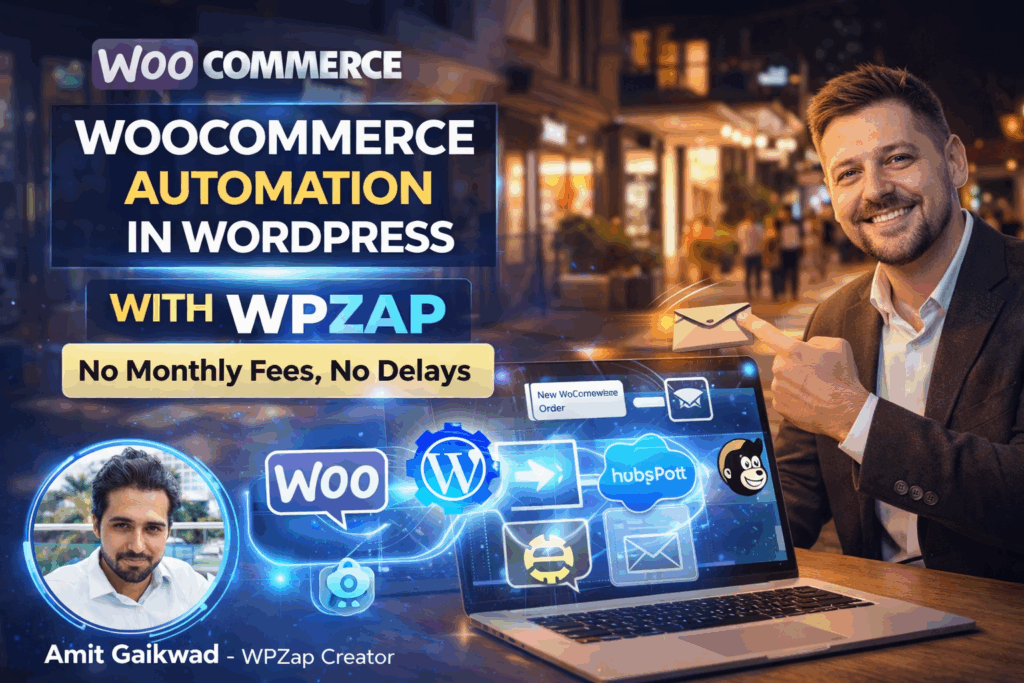
WooCommerce automation is one of the most common reasons WordPress users start looking for workflow tools. Orders, customers, payments, refunds, emails, and follow-ups all create repetitive tasks that quickly become unmanageable as stores grow.
Many WooCommerce store owners currently rely on external automation tools to handle these processes. Over time, however, recurring fees, execution delays, and broken workflows become hard to ignore.
This article looks specifically at whether WPZap is a good fit for WooCommerce automation and how it compares to common alternatives.
Why WooCommerce Automation Becomes a Bottleneck
WooCommerce generates a large number of events.
New orders, order status changes, customer registrations, subscription renewals, and abandoned carts all create opportunities for automation. Without a reliable system, store owners either handle these manually or rely on multiple plugins stitched together.
Common pain points include:
Delays in order notifications
Missed CRM updates
Manual syncing to Google Sheets or accounting tools
Inconsistent email triggers
Silent automation failures
These issues are amplified when workflows depend on external platforms that poll WooCommerce periodically instead of reacting instantly.
How WPZap Approaches WooCommerce Automation
WPZap integrates directly with WooCommerce inside WordPress.
When an order is created or updated, WPZap detects the event immediately. There is no waiting for an external service to check whether something happened.
From there, WPZap can trigger actions such as sending order data to CRMs, tagging customers in email platforms, updating spreadsheets, or firing webhooks to custom systems.
Because this happens inside WordPress, execution is faster and easier to debug.
Common WooCommerce Workflows WPZap Can Handle
WPZap is well suited for the most common WooCommerce automation needs.
Examples include:
Sending new order data to a CRM
Adding customers to email sequences
Triggering notifications for high-value orders
Syncing order details to Google Sheets
Updating customer records based on order status
Triggering webhooks for fulfillment systems
These workflows are often the same ones users previously built using Zapier or similar tools.
Conditional Logic for Smarter Store Automation
One of WPZap’s strengths is conditional logic.
Instead of running the same automation for every order, store owners can define rules. For example, only trigger certain actions for orders above a specific value or for customers in specific regions.
This allows WooCommerce automation to adapt to business logic rather than remain static.
Execution Logs and Reliability for Stores
WooCommerce automation needs to be reliable.
WPZap includes execution logs that show when automations ran and whether they succeeded. If an action fails due to a temporary issue, WPZap retries automatically.
This reduces the risk of losing orders or customer data due to silent failures.
Pricing Considerations for WooCommerce Users
WooCommerce stores often scale quickly. Pricing models based on task volume can become expensive.
WPZap uses a one-time pricing structure rather than a monthly subscription. Once purchased, automation volume does not increase cost.
For stores processing many orders, this predictability is a major advantage.
The full pricing and upgrade structure is covered in detail in the main review, but the key takeaway for WooCommerce users is cost stability.
Is WPZap Suitable for All WooCommerce Stores?
WPZap is a strong fit for stores that operate primarily within WordPress.
If your WooCommerce workflows depend heavily on non-WordPress platforms with no webhook support, external tools may still be needed. For most WooCommerce-centric setups, however, WPZap covers the core automation needs.
Trust, Legitimacy, and Refunds
WPZap is developed by Amit Gaikwad and Anirudh Baavra, creators with experience building WordPress automation tools.
The product includes a 30-day money-back guarantee, allowing store owners to test workflows without long-term risk.
Final Thoughts on WooCommerce Automation with WPZap
WPZap does not try to reinvent WooCommerce automation. It simplifies it.
By running automation inside WordPress, it removes delays, reduces dependency on third-party platforms, and keeps costs predictable.
For WooCommerce store owners who want reliable, native automation, WPZap is worth evaluating alongside existing tools.