WP Sync vs Zapier: Which Is Better for Marketers in 2026?
If you’re comparing WP Sync vs Zapier right now, chances are you’re staring at a monthly invoice and wondering if there’s a cheaper way to automate your leads. You’re not alone. Most marketers hit this exact wall once their list starts growing and the task-based pricing starts stinging.
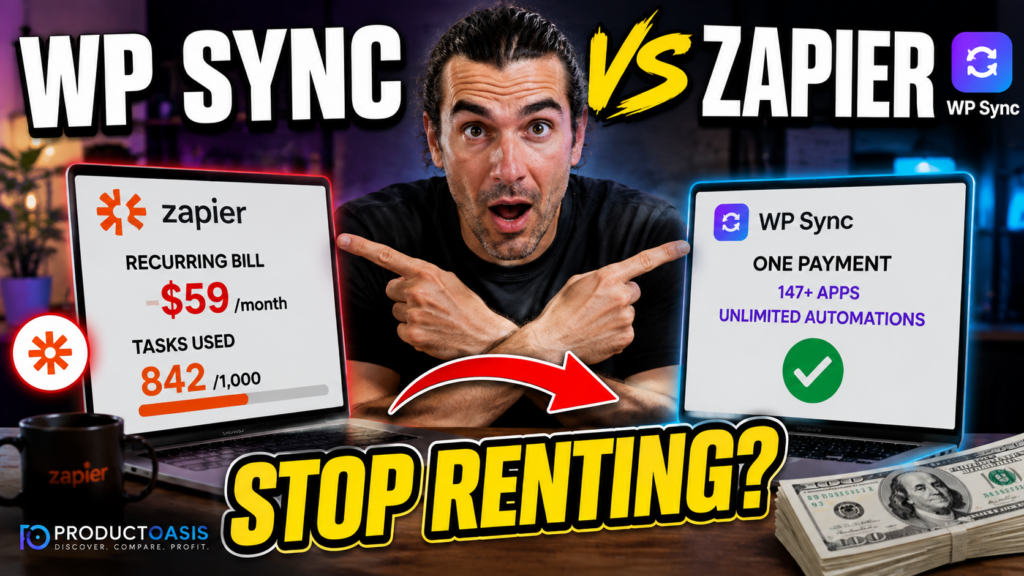
In simple terms, WP Sync wins for most WordPress-based marketers because it replaces Zapier’s monthly task meter with a single one time payment. Here’s what actually matters: if you already run WordPress, you’re paying for infrastructure you don’t need to rent twice. You can see the full pricing and feature breakdown here before deciding.
Why Are Marketers Comparing WP Sync vs Zapier In The First Place?
Zapier charges by the task. Therefore, sending one lead to three destinations burns three tasks, not one. As your list grows, so does the bill, often without warning.
WP Sync flips that model. Instead of metering every action, it offers unlimited automations across 147+ apps for a flat, one time fee. So the more you scale, the more you actually save.
How Does WP Sync Actually Compare To Zapier On Cost?
The key idea is simple math. A typical Zapier plan runs $29 to $99 a month, which adds up to roughly $1,740 to $5,940 over five years. WP Sync, however, starts at $47 once, with no renewal.
That gap alone answers the WP Sync vs Zapier question for most budget-conscious marketers. However, cost isn’t the only factor worth weighing.
What Does This Look Like In A Real Workflow?
Picture an affiliate marketer promoting on WarriorPlus. Normally, buyer emails don’t reach their autoresponder automatically, so most affiliates lose that list entirely after the sale.
With WP Sync, that same workflow looks different:
- The buyer completes checkout on WarriorPlus or JVZoo
- WP Sync syncs the contact to the autoresponder within minutes, tagged by product
- A follow up sequence fires automatically, no manual export required
Zapier can technically do this too, but only if the marketer keeps paying for enough tasks to support it every single month. I cover this comparison in more depth in my complete WP Sync review, including the full pricing tiers and bonuses.
Is There Any Reason To Stick With Zapier Instead?
Yes, in some cases. Zapier still supports a wider range of niche, non-marketing integrations, particularly for complex enterprise workflows outside WordPress. If your stack depends heavily on tools WP Sync doesn’t yet connect to, Zapier may still make sense.
For most course creators, affiliates and list builders, though, WP Sync covers the tools that matter most, including AWeber, GetResponse, Facebook Lead Ads, WooCommerce and Stripe, without the recurring fee.
So Which One Actually Wins In 2026?
To sum up, WP Sync vs Zapier isn’t a close call for marketers running WordPress. WP Sync offers the same core automation at a fraction of the long term cost, with your data staying on your own site instead of a third party server.
If you want the full side by side breakdown, including OTOs and launch pricing, my detailed WP Sync review walks through everything before you decide.